Dewatering 1 min read
Reading a site investigation before you price the pumps
Permeability, drawdown and the numbers that decide well-point versus deep-well.
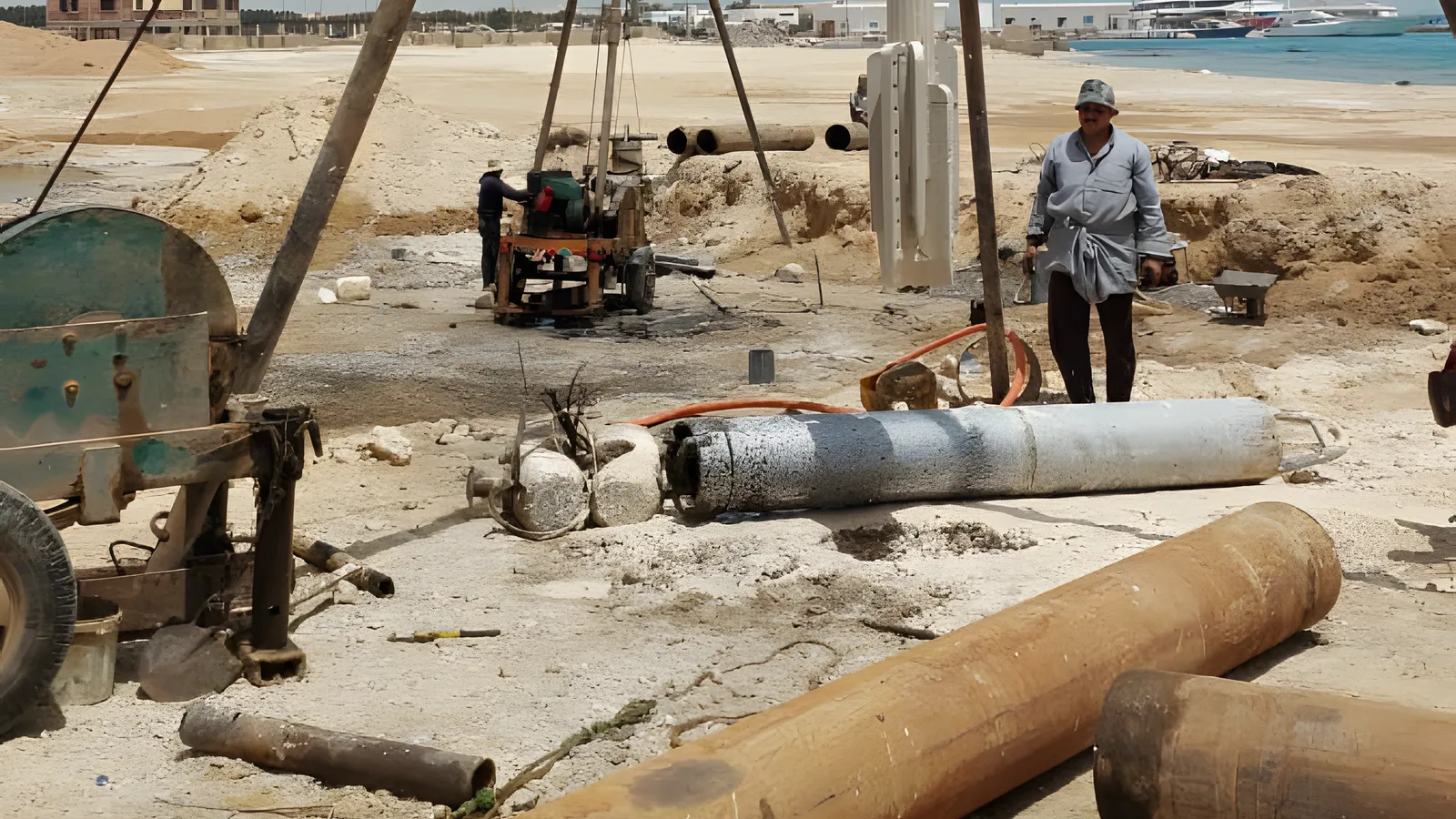
The first number to find in a site investigation is not the water table. It is the permeability of the soil the water is moving through, because that decides whether you can lower the table at all with the method you were about to price.
Well points work in soils with moderate permeability and shallow drawdown — fine sands and silty sands, down to roughly six metres in a single stage. Below that, or in more permeable ground where the flow rate defeats a vacuum system, the answer is deep wells with submersible pumps, and the pricing changes completely.
Permeability decides the method, not the depth
The second number is the required drawdown, measured from the existing table to half a metre below formation level. Getting this wrong by half a metre is the difference between a dry excavation and one that is technically dewatered but unworkable.
- Permeability from the site investigation, not from the soil description
- Drawdown measured to 0.5m below formation, not to formation
- Recharge from an adjacent water body changes the flow rate more than depth does
On coastal sites the sea is the recharge source and it does not run out. That is a flow-rate problem, not a depth problem, and it is priced as continuous pumping for the duration of the works rather than as an installation.
Have this problem on a live job?
Send us the drawings and a photograph — an engineer will come back the same day.
More from the technical office
What a FINA-approved pool actually requires
Tolerances, finishes and the equipment schedule that comes with the approval.AGIAL technical office18 Sep 2026
Choosing between epoxy, PU and hygienic vinyl
Thermal shock, chemical exposure and cleaning regime — three questions that settle it.AGIAL technical office18 Sep 2026