PVC 1 min read
Why a welded envelope fails at the seam, not the sheet
The sheet is manufactured to spec. The seam is made on site, in the weather, by a person.
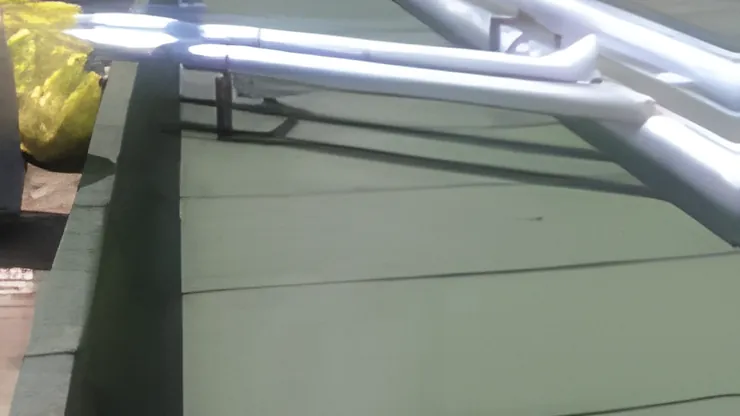
A PVC membrane arrives from the manufacturer at a specified thickness, tested, consistent along its whole length. Nothing that happens on site improves it, and very little damages it. The seam is the opposite: it is manufactured on the day, in the weather, by a person with a hot-air gun, and every metre of it is a place the envelope can fail.
This is why a welded envelope is specified by seam length rather than area, and why the method statement spends more words on welding parameters than on the sheet itself. Temperature, speed and pressure are the three variables, and all three drift as the day heats up.
The sheet is made in a factory; the seam is made on your site
The advantage is that a seam can be tested before it is buried. A test channel welded into the overlap takes air pressure; a vacuum box proves a lap; a flood test proves the whole tank. None of these are available on a liquid-applied system, where the first test is the first rainfall.
- Weld parameters are set against a trial weld each shift, not once at the start of the job
- Every lap carries a test channel, and the channel is pressure-tested before backfill
- Penetrations and corners are detailed with pre-formed pieces, not improvised on site
The failure mode to design against is not the sheet tearing. It is a cold weld that looked right, passed nobody's inspection, and was covered by 3 metres of backfill on the same afternoon.
Have this problem on a live job?
Send us the drawings and a photograph — an engineer will come back the same day.
More from the technical office
What a FINA-approved pool actually requires
Tolerances, finishes and the equipment schedule that comes with the approval.AGIAL technical office18 Sep 2026
Choosing between epoxy, PU and hygienic vinyl
Thermal shock, chemical exposure and cleaning regime — three questions that settle it.AGIAL technical office18 Sep 2026